
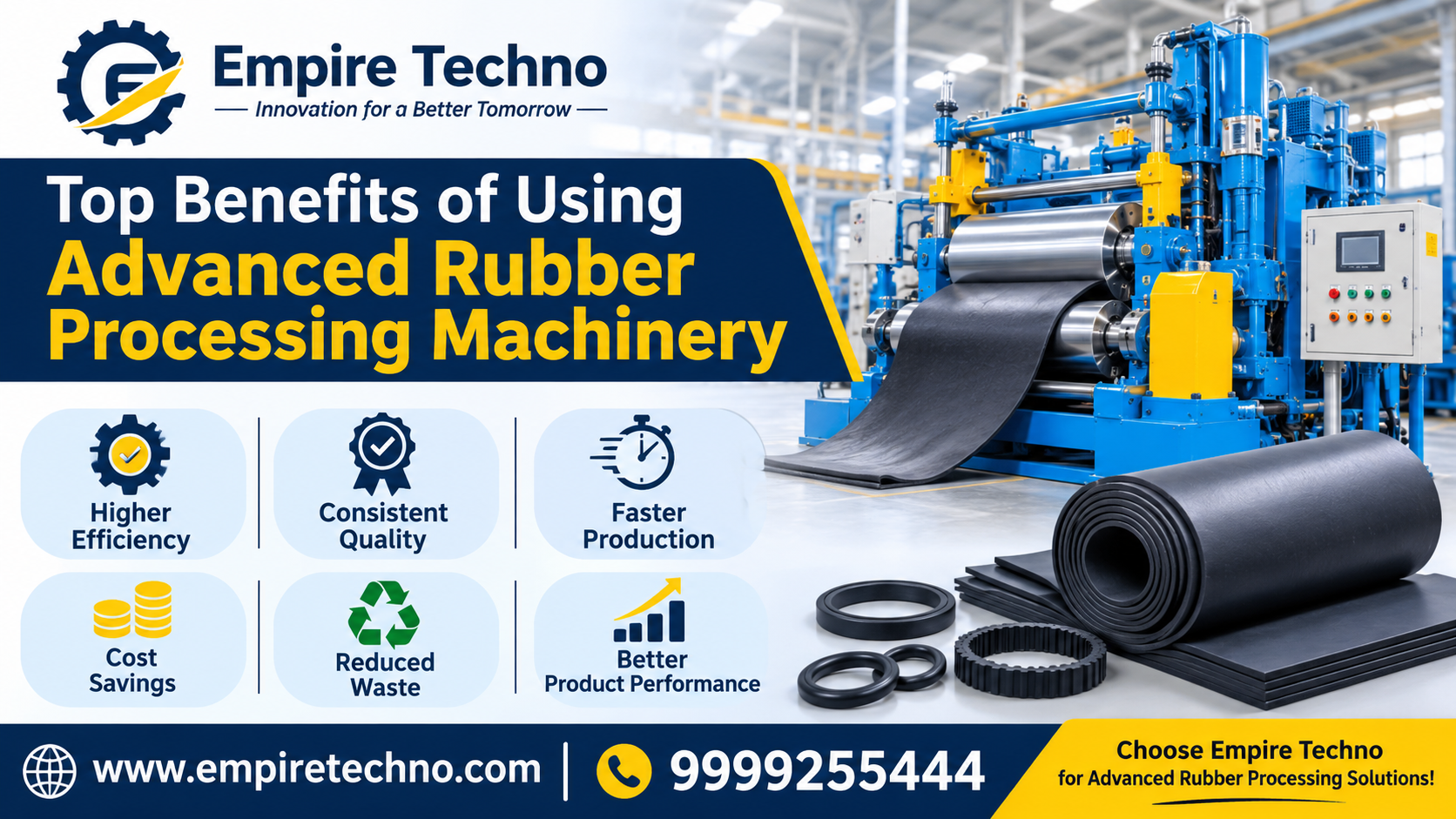
Top Benefits of Using Advanced Rubber Processing Machinery
Rubber is everywhere, from automobile parts and conveyor belts to footwear, gaskets, seals, and industrial flooring. Before it becomes a finished product, though, raw rubber goes through several stages of mixing, shaping, curing, and cutting. Each stage depends on specialized rubber processing machinery, and one machine that often decides how clean, accurate, and profitable your output will be is the rubber slitting machine.
This guide explains what a rubber slitting machine is, how it works, its benefits, and how to choose the right equipment for your plant.
What Is a Rubber Slitting Machine?
A rubber slitting machine cuts wide rubber sheets, rolls, or calendered material into narrower strips of a specified width. It uses rotating circular blades or knives set at precise intervals, so one pass can turn a large sheet into several uniform strips.
Manual cutting is slow, inconsistent, and unsafe. A slitting machine fixes this by giving you:
- Uniform strip width
- Smooth, clean edges
- Higher output per shift
- Less material waste
- Safer operation
Manufacturers of tapes, gaskets, rubber bands, sealing strips, and conveyor components rely on slitting machines to turn bulk material into usable sizes.
How Does a Rubber Slitting Machine Work?
The working principle is simple but needs precision engineering. The process usually runs in these steps:
- Unwinding: The rubber roll is mounted on an unwind stand, which feeds the material smoothly into the machine.
- Guiding and tension control: Guides keep the sheet aligned. Proper tension control prevents stretching, wrinkling, or uneven cuts.
- Slitting: Circular slitting blades mounted on a shaft cut the sheet into strips. Blade spacing can be adjusted to set the required width.
- Rewinding: The finished strips are wound onto separate cores or collected as cut lengths.
Depending on the model, the machine may be manual, semi-automatic, or fully automatic with digital controls.
Types of Rubber Slitting Machines
Different applications call for different designs. Common types include:
- Rotary Shear Slitting Machine
Uses upper and lower circular knives that work like scissors. It gives clean cuts on both thin and thick rubber sheets. - Razor Blade Slitting Machine
Uses sharp razor-type blades and suits thin, soft rubber films and lightweight materials. - Crush Cut Slitting Machine
Presses a blade against a hardened roller. It is used for softer, flexible compounds. - Rubber Strip Cutting Machine
Designed for continuous strips such as sealing profiles, rubber bands, and gasket strips.
Choosing the right type depends on rubber hardness, thickness, and your production volume.
Key Features to Look For
A good rubber slitting machine should offer the following:
- Durable blades: High-grade steel blades hold their edge longer and reduce downtime.
- Adjustable blade spacing: Lets you switch quickly between strip widths.
- Sturdy frame: A rigid body reduces vibration and keeps cuts accurate.
- Variable speed control: Lets you match speed to material thickness.
- Safety guards: Protect operators during high-speed cutting.
- Easy maintenance: Simple blade replacement and cleaning save time.
Benefits of Using a Rubber Slitting Machine
Improved Accuracy
Precision cutting keeps strip dimensions consistent. This matters for products like gaskets and seals, where even a small deviation can cause leaks or fitment issues.
Higher Productivity
Cutting several strips in one pass speeds up production, which helps with bulk orders and tight deadlines.
Reduced Waste
Accurate cuts mean less scrap and better use of expensive raw material, so your costs come down.
Better Operator Safety
Automated feeding and guarded blades reduce the injury risk of manual cutting.
Consistent Quality
Smooth edges and uniform widths improve the look and performance of the final product.
The Role of Rubber Processing Machinery
A slitting machine is only one part of the production chain. Complete rubber processing machinery covers every stage from raw compound to finished product:
- Rubber mixing mills: Blend rubber with additives, fillers, and curing agents.
- Internal mixers (Banbury/kneaders): Mix large batches under controlled temperature and pressure.
- Calenders: Press compounds into sheets of exact thickness.
- Extruders: Shape rubber into profiles, tubes, and cords.
- Hydraulic and compression molding presses: Mold and cure rubber into final shapes.
- Rubber cutting and slitting machines: Trim and size the material for packaging or assembly.
- Strainers and cooling units: Remove impurities and bring the material down to a stable temperature.
Because these machines work together, a quality problem at one stage often shows up at the next. For example, a sheet with uneven thickness from the calendar will cause poor slitting results. Choosing well-matched, reliable equipment is therefore a smart long-term investment.
Industries That Use Rubber Slitting Machines
- Automotive: Door seals, gaskets, vibration pads
- Footwear: Soles, linings, rubber strips
- Construction: Waterproofing sheets, expansion joint strips
- Electrical: Insulating rubber tapes and mats
- Packaging and stationery: Rubber bands and cushioning strips
- Industrial manufacturing: Conveyor belt components and flooring
How to Choose the Right Machine
Before you buy, consider these points:
- Material type and hardness: Natural rubber, EPDM, silicone, and neoprene each behave differently under the blade.
- Maximum width and thickness: Make sure the machine can handle your widest and thickest sheets.
- Production capacity: Match machine speed to daily output goals.
- Level of automation: Semi-automatic models suit small units, while larger plants benefit from automatic ones.
- After-sales support: Spare parts, training, and service make a big difference over time.
- Budget and ROI: Weigh the purchase price against long-term savings in labor and waste.
Maintenance Tips for Longer Machine Life
- Inspect and sharpen blades regularly.
- Lubricate moving parts as the manufacturer recommends.
- Keep the machine clean of rubber dust and debris.
- Check shafts, bearings, and belts for wear.
- Train operators in safe, correct usage.
Regular care keeps cutting quality high and prevents unexpected breakdowns.
Where to Find Reliable Equipment
Quality matters when investing in industrial machinery. To explore a range of rubber processing machinery and rubber slitting machines, visit Empire Techno. You can review the available equipment and get in touch to discuss your production requirements.
Final Thoughts
A rubber slitting machine is a practical, high-return piece of equipment for any rubber manufacturing unit. It improves accuracy, speeds up output, cuts waste, and keeps operators safer. Combined with a well-planned line of rubber processing machinery, it helps you deliver consistent, high-quality products to your customers.
Whether you are setting up a new plant or upgrading an existing one, choose equipment that fits your material, volume, and long-term growth plans.
Frequently Asked Questions (FAQs)
Q1. What is a rubber slitting machine used for?
A rubber slitting machine cuts large rubber sheets or rolls into narrower strips of precise width. It is widely used to make gaskets, sealing strips, rubber bands, and tapes.
Q2. Which rubber materials can be cut with a slitting machine?
Most machines can handle natural rubber, EPDM, neoprene, silicone, nitrile, and other synthetic rubbers. The blade type should be matched to the material’s hardness and thickness.
Q3. What is included in rubber processing machinery?
Rubber processing machinery includes mixing mills, internal mixers, calenders, extruders, molding presses, cutting and slitting machines, and cooling or straining units.
Q4. How often should slitting blades be replaced or sharpened?
It depends on usage and material. Blades should be inspected regularly and sharpened or replaced when cuts look rough or uneven, or when edges begin to fray.
Q5. How do I choose the right rubber slitting machine for my business?
Consider your material type, sheet width and thickness, daily output, automation level, and budget. Also check the supplier’s after-sales support. You can explore options and enquire at https://empiretechno.com/.
0 comments
Write a comment